Parking in Doha during a busy evening can feel like threading a needle with a blindfold on. You edge backwards, craning your neck, while a chorus of impatient horns fills the air. Then a gentle beep from your dashboard turns into a steady, urgent tone and you stop just centimetres from a concrete pillar you never even saw. That moment of relief is not magic. It is a tiny orchestra of sensors, processors and clever algorithms all working together in the time it takes you to blink.
Those parking beeps are just the tip of a very large iceberg. Modern cars now pack an entire suite of electronic eyes and ears that watch the road ahead, behind and beside you. They can spot a drifting motorbike in your blind spot on the Corniche or hit the brakes before you register a braking taxi on Salwa Road. These systems fall under a broad umbrella called Advanced Driver Assistance Systems, or ADAS. Understanding how their sensors actually work turns a mysterious dashboard chime into something you can appreciate and even tinker with yourself.
The Sensor Trio Behind Every Smart Car
The real genius lies not in any single sensor but in how their data streams merge together. A camera might struggle with glare from the low afternoon sun, but radar does not care about light at all. Radar can tell you exactly how fast a vehicle is approaching, but it cannot read a speed limit sign. By fusing camera, radar and ultrasonic inputs, the car builds a richer picture of its surroundings than any one sensor could manage alone. This process, which engineers call sensor fusion, is what makes automatic emergency braking and adaptive cruise control feel so smooth. Timing is everything in this high-speed data dance, and tiny crystal oscillators provide the stable heartbeat that keeps every sensor synchronised with the central processor.
How Radar Measures Speed and Distance
Radar works by shouting a radio pulse into the world and listening for its echo. The sensor measures how long the signal takes to bounce back, which gives an exact distance. It also detects a shift in the echo’s frequency caused by the target’s motion, a phenomenon called the Doppler effect. This lets a single radar module tell the car the exact distance and closing speed of a vehicle ahead. That dual measurement of distance and speed is radar’s superpower.
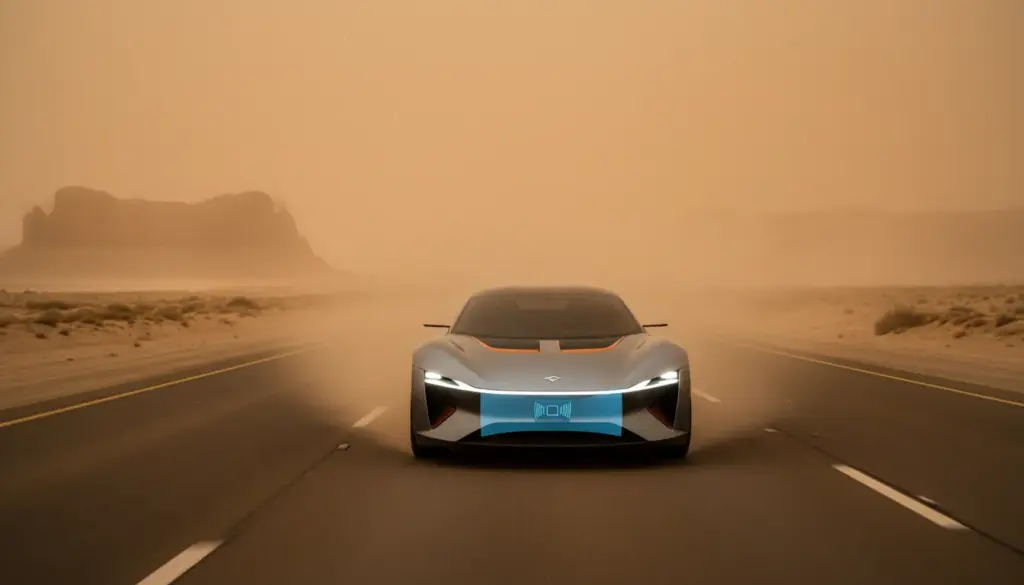
Automotive radar typically operates in the millimetre-wave bands around 24 GHz or 77 GHz. These high frequencies allow the antenna to be small enough to hide behind a bumper yet precise enough to separate two closely spaced motorcycles. Unlike a camera, radar punches straight through rain, dust and exhaust plumes. On a foggy morning, your adaptive cruise control keeps working because the radar module does not care that visibility has dropped.
Cameras That Read the Road
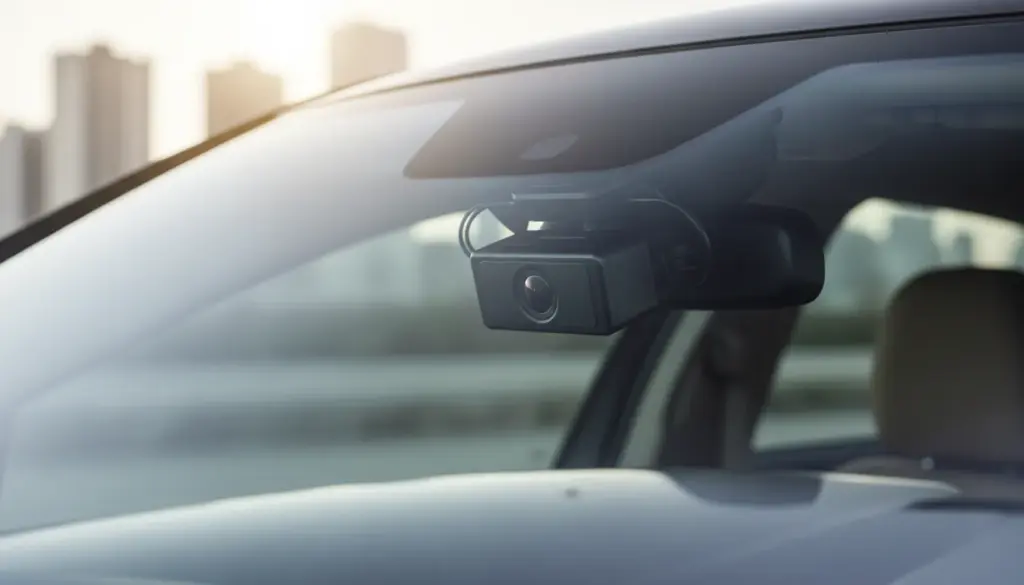
The forward-facing camera mounted behind your rear-view mirror is essentially a highly specialised digital eye. It captures a stream of images and feeds them to a processor trained to spot lane lines, road edges, pedestrians, cyclists and traffic signs. Modern automotive cameras use high dynamic range imaging to handle extreme contrasts, such as emerging from a darkened underground car park into blazing midday sunlight. Without this capability, the system would be momentarily blinded just when you need it most.
Ultrasonic Sensors for Tight Spaces
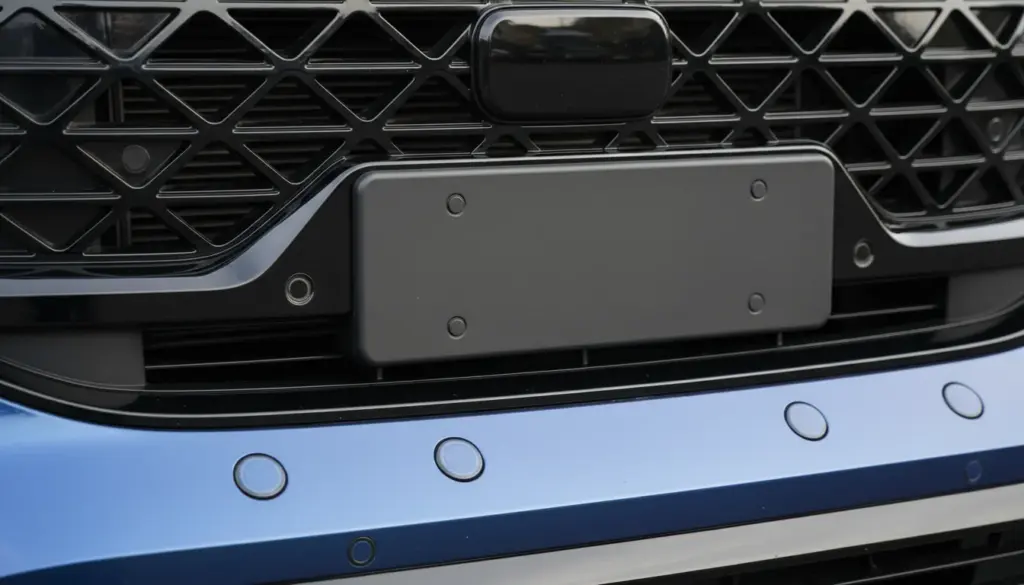
Those small circular discs dotting your bumpers are ultrasonic sensors, and they operate on the same principle as a bat navigating a cave. Each sensor emits a high-frequency sound pulse, well above the range of human hearing, and then waits for the reflection. The time delay reveals the distance to a nearby obstacle, whether that is a shopping trolley, a low concrete kerb or another vehicle’s tow bar. Their range is short, typically under five metres, but their resolution at close quarters is excellent. The familiar beeping that accelerates as you close in on an obstacle is a direct translation of the sensor’s time-of-flight measurements into an audible warning.
From Warning Beeps to Automatic Braking
Sensors alone do not save lives. The true value of ADAS emerges when the car acts on sensor data to prevent a collision or reduce its severity. The Society of Automotive Engineers defines six levels of driving automation, from Level 0 with no assistance to Level 5 with full autonomy. Most cars on the road today sit at Level 1 or Level 2, where the driver remains fully responsible but receives active help. Understanding these levels clarifies exactly what your car can and cannot do.
| Level | Name | Driver Role | Example Feature |
|---|---|---|---|
| Level 0 | No Automation | Full control at all times | Blind Spot Detection, Forward Collision Warning |
| Level 1 | Driver Assistance | Hands on, eyes on | Adaptive Cruise Control, Automatic Emergency Braking |
| Level 2 | Partial Automation | Supervise constantly | Adaptive Cruise Control plus Lane Centring |
| Level 3 | Conditional Automation | Ready to take over | Traffic jam pilot under specific conditions |
Automatic Emergency Braking, or AEB, represents one of the most significant safety advances in a generation. When the forward radar and camera agree that a collision is imminent and the driver has not reacted, the system commands the brakes with maximum force. It does not ask permission. The goal is to avoid the impact entirely at lower speeds or to scrub off enough energy to reduce injuries at higher speeds. AEB relies on the sensor fusion we discussed earlier, because a false positive at highway speed would itself be dangerous.
The Hidden Hardware That Makes It All Tick
Behind every sensor lies a web of electronic control units, high-speed data networks and precision timing components. A single high-resolution camera can generate over a gigabit of data per second, while radar and ultrasonic streams add their own continuous feeds. Automotive Ethernet and specialised protocols have replaced the old, slow CAN bus for these data-hungry applications, shuttling sensor data to domain controllers that make split-second decisions. Crystal oscillators deserve special attention as the unsung heroes of automotive electronics, providing a stable clock signal that directly affects how accurately a radar module measures Doppler shift.
For makers and tinkerers, this architecture opens up fascinating project possibilities. The same ultrasonic sensors found in production bumpers are available as inexpensive modules compatible with Arduino and Raspberry Pi boards. You can build a working parking sensor demo on your workbench for a fraction of what a commercial system costs. Understanding the principles of time-of-flight measurement and sensor fusion at a small scale gives you genuine insight into how the systems in a showroom vehicle actually function under the skin. Automotive-grade crystals must survive brutal temperature swings, constant vibration and years of operation without drifting out of specification.
What This Means for Drivers in the Gulf
Driving conditions in Qatar and the wider Gulf present unique challenges that stress ADAS sensors in specific ways. Extreme summer heat pushes electronics to their thermal limits, testing the reliability of every solder joint and crystal oscillator. Sudden dust storms can reduce visibility to near zero, a scenario where radar continues functioning while cameras and human eyes struggle. Glare from low-angle winter sun and reflections from glass-clad urban towers create challenging lighting conditions that test a camera’s high dynamic range processing to its limits.
Keeping your sensors clean is the single most effective thing you can do to maintain ADAS performance. A dusty rear bumper can muffle ultrasonic pulses and cause parking sensors to miss low obstacles. A smeared windscreen in front of the camera housing will degrade lane keeping accuracy. A quick wipe of the radar cover and camera window during your weekly car wash makes a measurable difference. These systems are engineered for real-world conditions, but they are not maintenance-free, and a little attention goes a long way.